

 Tiếng Việt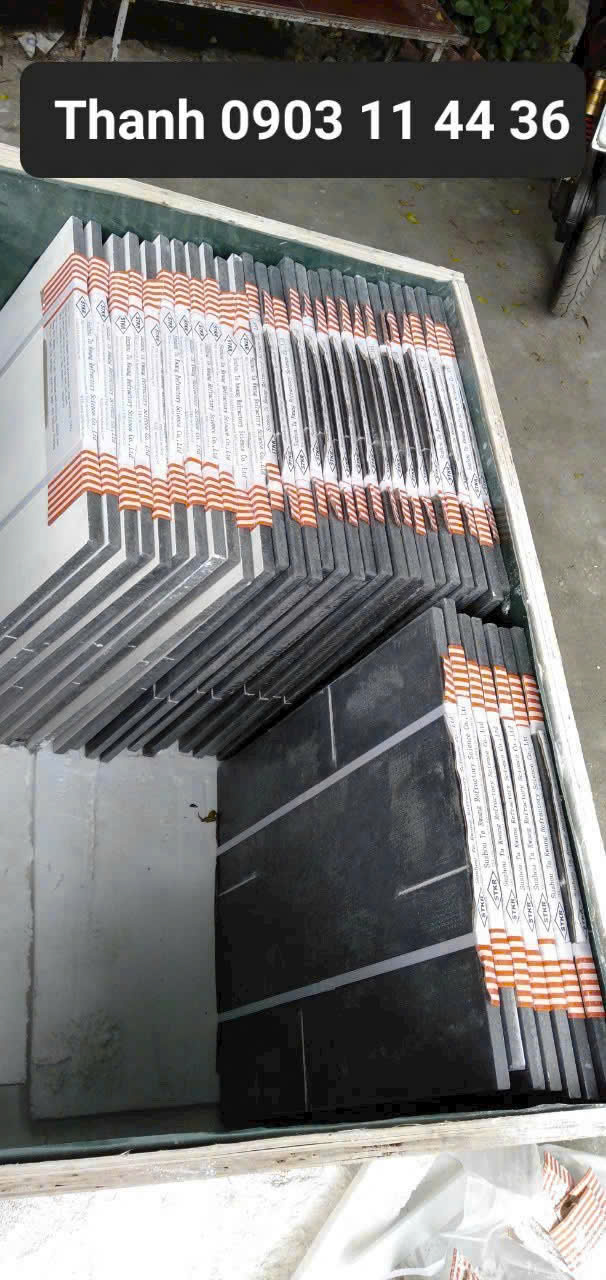
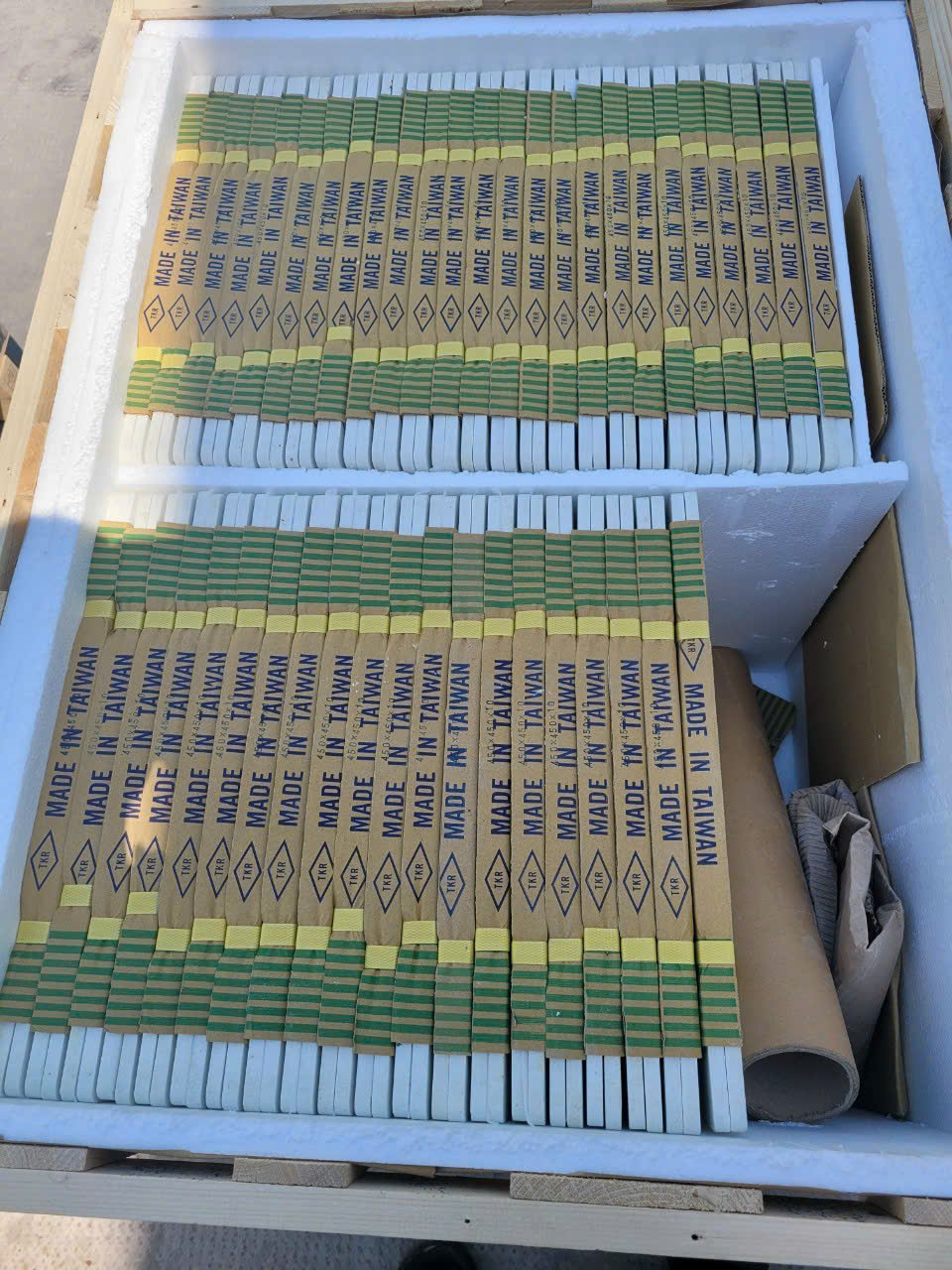
Silicon Carbide Kiln Plates (SiC Plates & Shelves)
Introduction
SiC kiln plates are high-performance refractory materials manufactured from pure silicon carbide (SiC) or bonded SiC, specifically designed for high-temperature kilns in the ceramic, sanitary ware, technical ceramics, and refractory industries.
Thanks to their outstanding thermal resistance and high mechanical strength, SiC setters are widely used to support, stack, and separate products during firing, ensuring stable firing conditions, uniform heat distribution, and reduced deformation of fired products.
Key Technical Features
- High temperature resistance: up to 1,380 – 1,650°C (depending on SiC grade)
- High mechanical strength and excellent load-bearing capacity, even at elevated temperatures
- Excellent thermal conductivity for uniform heat distribution inside the kiln
- Minimal deformation and warping after multiple firing cycles
- Good oxidation resistance and chemical corrosion resistance
- Long service life, reducing kiln furniture replacement costs
I. Classification by Bonding Structure
1. Oxide-Bonded SiC Kiln Plates (OSiC Plates)
- Bonded with SiO₂
- Cost-effective and easy to use
- Suitable for oxidizing kiln atmospheres
Applications:
Household ceramics, sanitary ware, ceramic tiles
Maximum working temperature: ≤ 1,400 – 1,450°C
2. Nitride-Bonded SiC Kiln Plates (NSiC)
- Bonded with Si₃N₄
- High mechanical strength and excellent thermal shock resistance
- Longer service life compared to oxide-bonded SiC
Applications:
Heavy-load sanitary ware, technical ceramics, tunnel kilns
Maximum working temperature: ≤ 1,550°C
3. Reaction-Bonded Silicon Carbide (SiSiC / RBSiC) Kiln Plates
Features:
- Molten silicon infiltrates SiC, forming an extremely dense structure
- Well-balanced performance in terms of cost, strength, and service life
Working Temperature: ~1380–1450°C
Applications:
- Ceramic and porcelain tiles
- Roller kilns and tunnel kilns
4. Recrystallized SiC Kiln Plates (RSiC)
- Nearly pure silicon carbide
- Extremely high dimensional stability and thermal conductivity
- Higher cost with the highest performance level
Applications:
Advanced technical ceramics, high-temperature kilns
Maximum working temperature: ~1600–1650°C
II. Technical Specifications
A. Chemical Composition (Reference Values)
- SiC (Silicon Carbide): ≥ 75 – 92%
- SiO₂: ≤ 5 – 8%
- Al₂O₃ + Fe₂O₃ : ≤ 3 – 5%
(Exact composition depends on SiC type: oxide-bonded / nitride-bonded / recrystallized SiC)
B. Physical Properties
|
Property |
Typical Value |
|
Bulk Density |
>2.65 -3.00 g/cm³ |
|
Water Absorption |
0% |
|
Cold Modulus of Rupture |
≥ 250 MPa |
|
Compressive Strength |
≥ 1500 MPa |
III. Main Applications
In the ceramic industry, SiC kiln setters are widely used as support plates and beams in roller kilns and tunnel kilns for firing ceramic tiles, sanitary ware, and household ceramics.
Thanks to their high load-bearing capacity and resistance to bending at high temperatures, SiC setters help optimize stacking density and improve kiln efficiency.
In technical ceramics and high-end ceramic applications, SiC setters are used for firing materials that require high temperatures and excellent dimensional stability, such as technical alumina, zirconia, and electrical & electronic ceramic components.
In addition, SiC materials are extensively applied in refractory materials for metallurgical furnaces, lithium battery material kilns, as well as corrosion-resistant components in the chemical processing and waste treatment industries.




Reviews
There are no reviews yet.