

 Tiếng Việt

TITANIUM DIOXIDE (TiO₂)
Introduction:
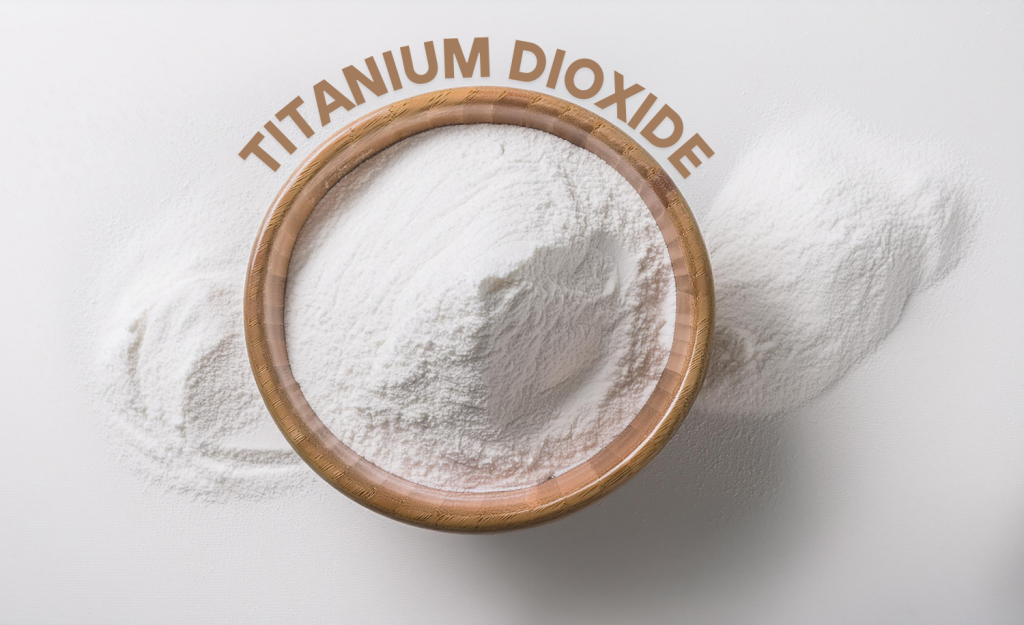
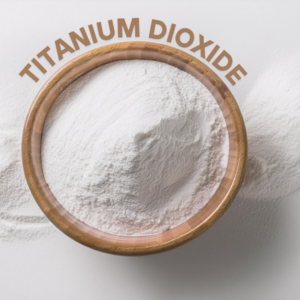
Titanium Dioxide (TiO₂), also known as titanium white or titania, is a naturally occurring inorganic compound and an oxide of titanium. It is the brightest white pigment known and offers the highest hiding power due to its extremely high refractive index. TiO₂ mainly exists in two crystalline forms: rutile (more stable) and anatase. It is chemically inert, thermally stable, and highly effective in UV protection.
1. Classification and Composition
• Chemical formula: TiO₂
• Molar mass: 79.87 g/mol
• Main chemical constituents: Titanium and oxygen
• Main crystal forms:
– Rutile: The most stable crystal form with a higher refractive index; preferred for paints and plastics.
– Anatase: Exhibits higher photocatalytic activity; commonly used in ceramics and applications requiring self-cleaning properties.
2. Technical Specifications
|
Parameter |
Value / Characteristics |
|
Appearance |
Fine, bright white powder (titanium white) |
|
Melting point |
Very high (~1843 °C) |
|
Refractive index |
High (rutile ≈ 2.7), providing superior whiteness and hiding power |
|
UV resistance |
Excellent (absorbs and scatters UV radiation) |
|
Key properties |
Chemically inert, electrically insulating, photocatalytic |
3. Key Applications in Industry and Ceramics
- Ceramic & Glaze Industry:
– Whitening / Opacifying Agent: A primary whitening and opacifying material for ceramic glazes and tiles, delivering deep whiteness and high opacity.
– Enhanced Hardness & Thermal Stability: TiO₂ improves mechanical strength, hardness, and thermal resistance of glazes and ceramic bodies.
– Color & Texture Effects: In high-temperature glazes, TiO₂ often interacts with other oxides to create crystalline effects, speckling, or color shifts (e.g., producing earthy blue tones in reduction when combined with iron oxide).
– Antibacterial / Self-Cleaning Ceramics: Nano-sized TiO₂ (anatase) is applied as a surface coating on tiles and sanitary ware to enable photocatalytic decomposition of pollutants and bacteria under light exposure. - Paints & Plastics Industry (Largest Application):
– Primary White Pigment: Used as the base pigment in most paints, inks, and plastics to enhance opacity, brightness, and color durability.
– Anti-Aging Additive: Protects polymers and coatings from UV-induced degradation. - Pharmaceuticals & Cosmetics:
– A key component in physical sunscreens and as a whitening agent in tablet formulations.




Reviews
There are no reviews yet.