

 Tiếng Việt
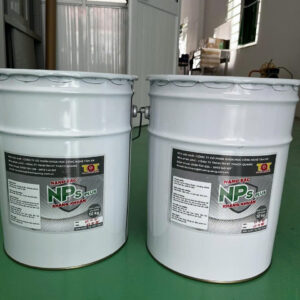
MOLD RELEASE AGENTS
1. Introduction
Mold release agents (also known as anti-stick agents or release coatings) are chemical or material formulations applied as a thin film on mold surfaces to create anti-adhesion and lubricating properties. This allows molded products to be released easily without damaging either the product or the mold.
The correct selection and application of mold release agents help to:
- Reduce surface defects and breakage during demolding
- Extend mold service life
- Improve process stability and production efficiency
2. Classification and Composition
Mold release agents are mainly classified according to their base material and operating temperature range:
|
Type |
Main Composition |
Application Form |
Typical Temperature Range |
|
Silicone-based |
Polydimethylsiloxane (PDMS), emulsion or spray solution |
Liquid / spray (water-based or oil-based) |
Low to medium temperatures (≤ 300°C) |
|
Wax-based |
Synthetic waxes, paraffin, fatty acid salts |
Paste, coating, or spray |
Low-temperature molds |
|
Inorganic high-temperature |
Boron Nitride (BN), Talc, Graphite (water/alcohol suspension) |
Spray or brush coating |
High temperatures (≥ 1000°C) |
3. Typical Technical Properties
|
Parameter |
Description |
|
Function |
Anti-adhesion barrier and surface lubrication |
|
Thermal stability |
Depending on type: from room temperature up to above 1000°C |
|
Appearance |
Liquid (emulsion or oil), waxy solid, or fine powder |
|
Coating behavior |
Forms a thin, uniform film without residue buildup |
|
Safety & environment |
Many products are water-based, environmentally friendly, and safe for operators |
4. Industrial and Ceramic Applications
4.1. Ceramic Industry (Slip Casting)
- Although plaster molds naturally absorb water and facilitate self-release, mold release agents (such as talc or light organic additives) are often applied to:
- Lubricate complex mold geometries
- Reduce mold wear
- Improve demolding of intricate ceramic shapes
- Inorganic release agents (BN, graphite) are widely used as coatings for ceramic and refractory molds, preventing material adhesion and ensuring stability under high-temperature conditions.
4.2. Metallurgical Industry (Die Casting)
- A critical application area is high-pressure die casting of aluminum, zinc, and copper alloys.
- Water-based release agents or high-temperature BN coatings are sprayed onto the mold surface to:
- Cool the mold
- Provide lubrication
- Prevent molten metal from sticking
- Extend mold life and improve casting surface quality
4.3. Plastics and Rubber Industry
- Silicone- and wax-based release agents are extensively used for demolding:
- Precision plastic components
- Rubber products
- Tires and high-accuracy molded parts
4.4. Glass and Fiberglass Manufacturing
- Used as mold lubricants and anti-adhesion coatings in:
- Fiberglass production
- Selected glass and technical ceramic forming processes




Reviews
There are no reviews yet.