

 Tiếng Việt
GLAZE STABILIZING ADDITIVES (GLAZE STABILIZERS)
1. Introduction
Glaze stabilizing additives are materials added to glaze slurries to control key rheological properties such as viscosity, thixotropy, surface tension, and water retention. Their primary function is to maintain suspension stability, prevent sedimentation and phase separation, and ensure good glaze adhesion to the ceramic body throughout application, drying, and firing.
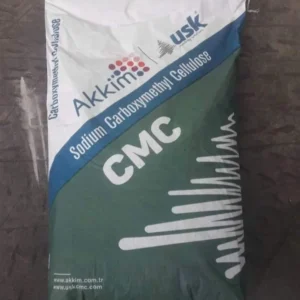
In the ceramic industry, the most widely used and effective glaze stabilizers are CMC (Carboxymethyl Cellulose) and Bentonite.
2. Classification and Composition
Glaze stabilizers are classified into two main groups based on their chemical nature:
|
Category |
Typical Material |
Composition / Formula |
Stabilization Mechanism |
|
Organic (Binders) |
CMC (Carboxymethyl Cellulose) |
[C₆H₇O₂(OH)₂OCH₂COONa]ₙ |
Forms a polymeric colloidal network in water, increasing viscosity and inter-particle bonding |
|
Inorganic (Clays) |
Bentonite |
Primarily Montmorillonite mineral |
Strong swelling in water, creating a gel-like, thixotropic structure that resists sedimentation |
3. Typical Technical Properties
|
Parameter |
CMC (Organic) |
Bentonite (Inorganic) |
|
Appearance |
Fine powder, white to light yellow |
Fine powder, gray to cream |
|
Viscosity effect |
High – adjustable by CMC grade |
Very high – strong thixotropy |
|
Key characteristic |
Clean burn-out during firing, no ash or carbon residue |
Prevents hard settling, provides long-term suspension stability |
|
Typical dosage |
Low: 0.1 – 0.5% (based on dry glaze weight) |
Very low: typically < 1% |
4. Functional Benefits in Production
4.1. Suspension Stability
- Keeps frits, ceramic pigments, zircon, alumina, and fillers uniformly dispersed in water
- Prevents rapid settling, stratification, and hard sediment formation at the bottom of tanks
- Maintains consistent glaze properties during storage and continuous production
4.2. Improved Application Performance
- CMC:
- Enhances glaze adhesion to the green or biscuit-fired body
- Reduces dusting after drying
- Minimizes flaking and peeling of the dried glaze layer
- Bentonite:
- Provides thixotropic behavior: thick at rest, fluid under shear
- Ensures smooth flow, uniform coverage, and effective pore filling of the ceramic body
4.3. Defect Control
- Helps reduce common glaze defects such as:
- Crawling (glaze pull-back / poor adhesion)
- Pinholes and uneven glaze surfaces
- Improves the integrity of the unfired glaze layer, especially critical in fast-firing and single-firing processes
5. Applications in Advanced and Technical Ceramics
- Ensures stable dispersion of technical additives such as:
- Zirconium Silicate (ZrSiO₄)
- Alumina (Al₂O₃)
- Contributes to achieving high opacity, mechanical strength, chemical resistance, and color stability after firing
- Suitable for:
- Ceramic wall and floor tiles
- Porcelain and granite tiles
- Technical ceramics and specialty glazes
6. Selection and Usage Guidelines
- Avoid overdosing CMC or Bentonite, which may cause:
- Excessive viscosity
- Poor sprayability and foaming
- Optimize stabilizer dosage in combination with:
- Glaze fineness (milling degree)
- Poor sprayability, easily foaming
Proper formulation ensures maximum stability, application efficiency, and consistent fired glaze quality.




Reviews
There are no reviews yet.