

 Tiếng Việt

Introduction
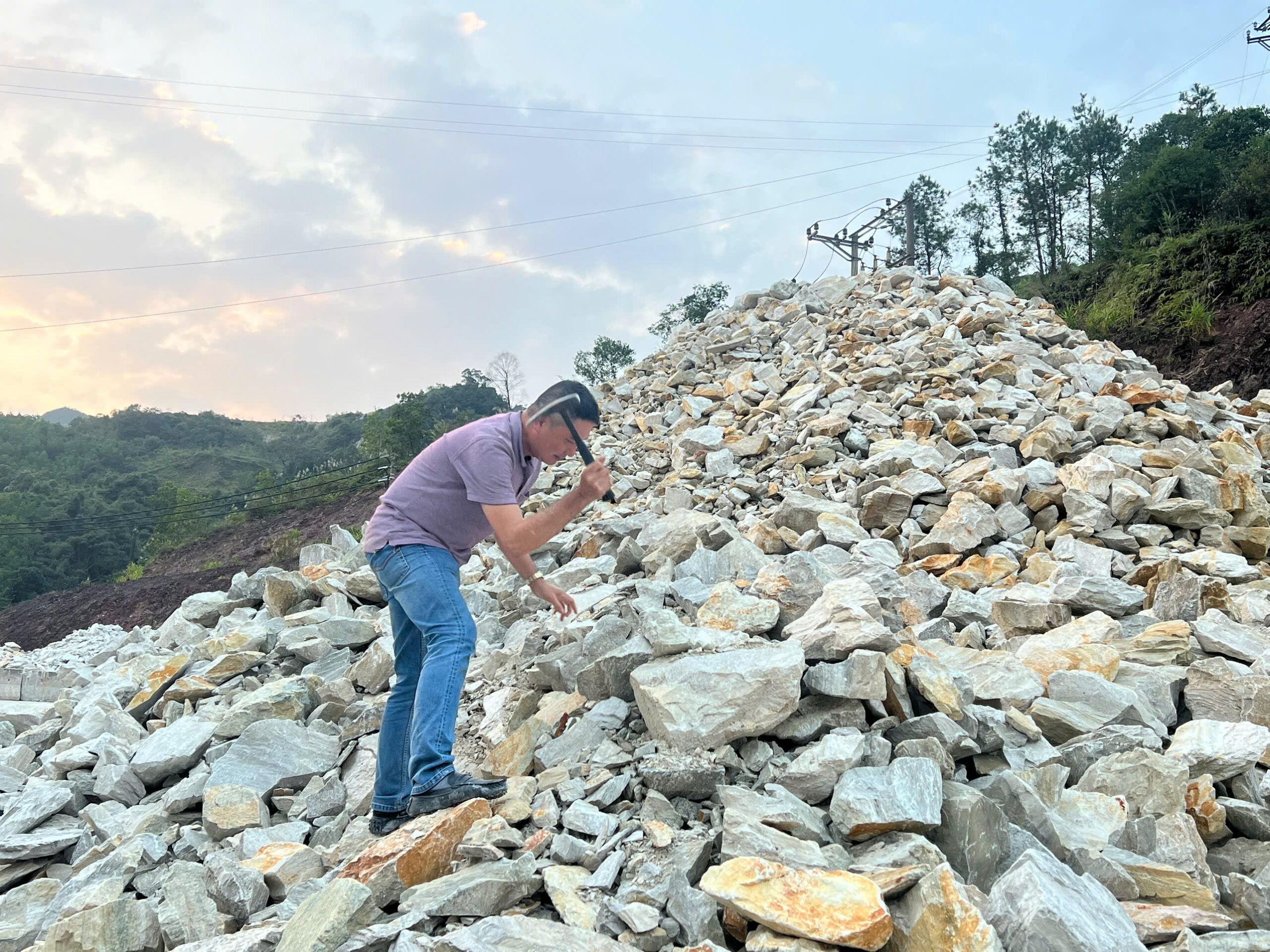
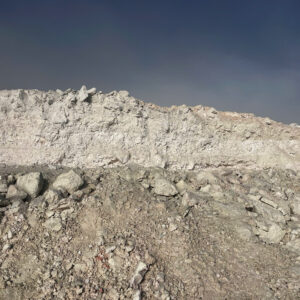
Pyrophyllite is a special phyllosilicate (layered silicate) mineral with the chemical composition of aluminum silicate hydroxide: Al₂Si₄O₁₀(OH)₂. Its most outstanding characteristics are exceptional thermal stability, very low thermal expansion, and the ability to significantly improve the thermal shock resistance of materials.
Thanks to these properties, pyrophyllite is widely used in industries requiring heat-resistant materials with high dimensional stability.
1. Classification and Composition
1.1. Chemical Composition
Pyrophyllite mainly consists of Al₂O₃ and SiO₂ with structural water:
|
Component |
Formula |
Typical Content |
Remarks |
|
Chemical formula |
Al₂Si₄O₁₀(OH)₂ |
— |
— |
|
Silicon Dioxide |
SiO₂ |
> 40% |
— |
|
Aluminum Oxide |
Al₂O₃ |
15% – 40% |
Provides stable alumina content |
|
Structural water |
H₂O |
Low |
Slowly released upon heating |
1.2. Classification by Application
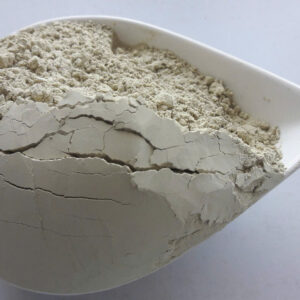
Pyrophyllite is typically supplied in fine powder form (commonly 325 mesh) for use as an additive:
- Pyrophyllite for Ceramics / Ceramic Tiles: High purity, good whiteness, and stable composition to reduce thermal expansion.
- Pyrophyllite for Refractory Materials: Higher alumina content, used in refractory bricks, high-temperature ceramic components, sanitary ware, and large or complex-shaped ceramic products.
2. Physical & Thermal Technical Properties
|
Parameter |
Value / Characteristics |
|
Appearance |
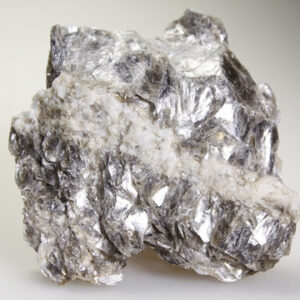
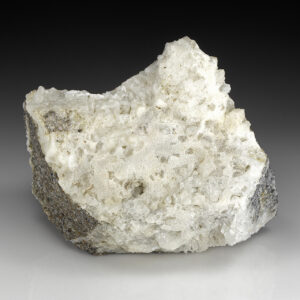
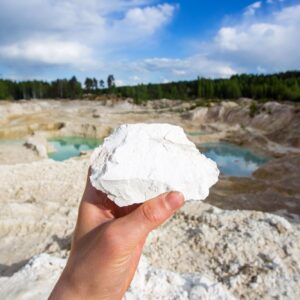
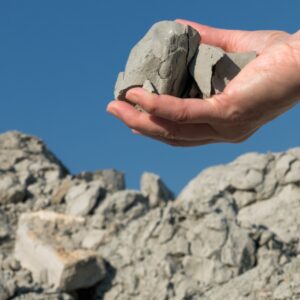
Compact massive or platy crystalline form; white, gray, or pale green |
|
Hardness (Mohs) |
1 – 2 (Very soft, easy to grind) |
|
Specific gravity |
2.65 – 2.85 |
|
Thermal behavior |
Excellent thermal stability |
|
Thermal expansion |
Very low (especially up to 1050 °C); may exhibit slight volumetric expansion above 700 °C, contributing to improved material integrity |
|
Thermal shock resistance |
Enhances resistance to thermal shock |
3. Key Applications in Industry and Ceramics
Pyrophyllite is a core raw material for high-temperature applications, particularly in ceramics and refractory industries.
3.1. Applications in Ceramics and Ceramic Tiles
Pyrophyllite is added to ceramic body formulations to improve the following key properties:
- Reduced Shrinkage and Cracking: Decreases drying and firing shrinkage as well as thermal expansion, resulting in improved dimensional stability and reduced cracking in products such as ceramic tiles and sanitary ware.
- Improved Thermal Shock Resistance: Due to its low thermal expansion coefficient, pyrophyllite enables ceramic products to withstand sudden temperature changes without cracking or spalling.
- Lower Sintering Temperature: Acts as a mild flux, helping reduce firing temperature and energy consumption.
- Enhanced Mechanical Strength: Ceramic products containing pyrophyllite typically achieve higher vitrification levels and improved mechanical strength.
3.2. Applications in Refractory Materials
This is one of the largest consumption sectors for pyrophyllite:
- Refractory Brick Production: Pyrophyllite is a primary raw material for manufacturing pyrophyllite bricks, widely used in permanent linings of molten metal ladles, metallurgical furnaces, and other applications requiring high heat and thermal shock resistance.
- High-temperature ceramics: Including ceramic materials, sanitary ware, large-size sanitary ware, and ceramic products with complex geometries.
- Electrical Insulation and Wear-resistant Materials: Used to manufacture heat-resistant and electrically insulating components, MIG/TIG welding nozzles, and other wear-resistant parts due to its chemical inertness and high stability.



Reviews
There are no reviews yet.