

 Tiếng Việt

CERACITE
Introduction
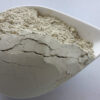
Ceracite is a trade name used for a high-purity mineral material, specially processed for dedicated applications in the ceramic industry and other industrial sectors. Ceracite is well known for its excellent thermal resistance, its ability to enhance mechanical strength and wear resistance of the final products, and its contribution to improved surface quality and batch homogeneity.
Although Ceracite is not a formally recognized mineral species in geological classification, it is supplied as a technical additive, potentially representing a highly refined form of silicate or aluminosilicate material.
1. Classification and Composition
As Ceracite is a trade name, its exact composition may vary depending on the supplier. However, its fundamental characteristics indicate that it belongs to the group of non-metallic minerals based on silicate / aluminosilicate systems.
1.1. Chemical Composition (Application-based)
Ceracite is chemically optimized to meet the high-quality standards required in ceramic applications:
- Main mineral phase: High-purity silicate or aluminosilicate
- Impurity content: Extremely low, especially coloring oxides such as Fe₂O₃ and TiO₂, to ensure high whiteness of ceramic products
1.2. Physical Form
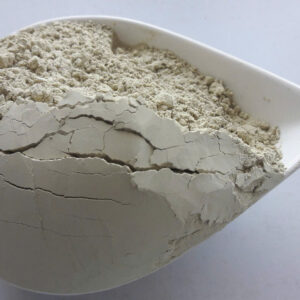
Ceracite is typically supplied in fine powder form to ensure excellent dispersion and homogenization in ceramic bodies, glazes, coatings, and polymer systems.
2. Technical Properties (Ceramic-focused)
|
Parameter |
Characteristics |
|
Appearance |
Fine, dry powder |
|
Purity |
Very high |
|
Thermal resistance |
High, stable under ceramic firing temperatures |
|
Adsorption / wear resistance |
Excellent |
|
Chemical inertness |
Stable, non-reactive with other batch components |
3. Key Applications in Industry and Ceramics
Ceracite is used as a functional filler and technical additive to enhance material performance:
3.1. Applications in Ceramics and Ceramic Tiles
Ceracite is added to ceramic bodies and glazes to improve both technical and aesthetic properties:
- Improved Mechanical Strength: Enhances the microstructure of ceramic bodies and tiles, resulting in increased flexural strength and hardness of the final product.
- Enhanced Wear Resistance: Significantly improves surface abrasion resistance in ceramic tiles and load-bearing flooring materials, extending product service life.
- Improved Surface Quality and Glaze Performance: Promotes smoothness, uniformity, and desired gloss after firing, while reducing surface defects.
- Shrinkage Control: Contributes to dimensional stability during drying and firing processes.
3.2. Applications in Other Industries
- Paints and Coatings: Used as a functional filler to improve hiding power, abrasion resistance, and chemical durability of coatings.
- Plastics and Rubber: Applied as a filler to enhance physical properties such as tensile strength, hardness, and wear resistance in polymer and rubber products.




Reviews
There are no reviews yet.