

 Tiếng Việt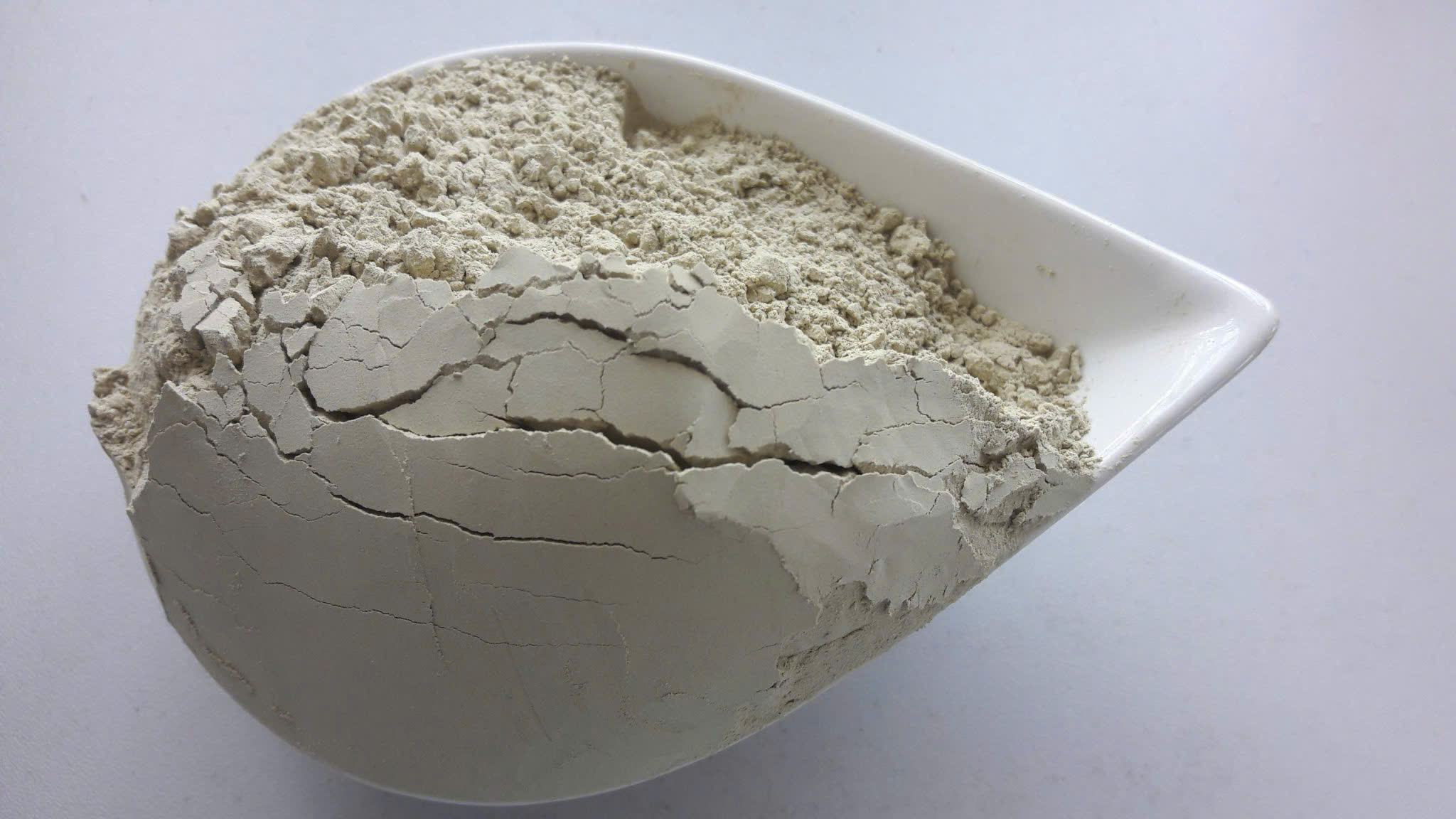
BENTONITE
Introduction
Bentonite is the common name for a group of water-absorbing aluminum phyllosilicate clays, whose principal mineral component is Montmorillonite (typically ≥ 70%).
This clay mineral has a unique layered structure, allowing alkali and alkaline-earth metal cations (such as Na⁺ and Ca²⁺) to be hydrated and intercalated between the layers. As a result, Bentonite exhibits strong swelling capacity, high viscosity, and excellent ion-exchange and adsorption properties.
Bentonite is mainly classified into Sodium Bentonite (high swelling capacity) and Calcium Bentonite (high adsorption capacity).
1. Classification and Composition
1.1. Classification by Exchangeable Cations
- Sodium Bentonite
Exhibits very strong swelling behavior (several times its original dry volume) upon contact with water, generating high viscosity and pronounced thixotropic properties.
Commonly used in drilling fluids, casting, and molding applications. - Calcium Bentonite
Displays lower swelling capacity but higher adsorption performance.
Often used for activation to produce activated clay (bleaching earth) for oil refining and environmental treatment.
1.2. Main Chemical Composition
|
Component |
Formula |
Notes |
|
Primary mineral |
Montmorillonite |
(Na,Ca)₀.₃(Al,Mg)₂Si₄O₁₀(OH)₂·nH₂O |
|
Silicon Dioxide |
SiO₂ |
Present in high proportion |
|
Aluminum Oxide |
Al₂O₃ |
Significant content |
|
Exchangeable cations |
Na⁺, Ca²⁺, Mg²⁺, K⁺ |
Influence swelling behavior |
|
Accessory minerals |
Quartz, Illite, Kaolinite, etc. |
Minor constituents |
2. Physical & Mechanical Properties
|
Parameter |
Characteristics |
|
Appearance |
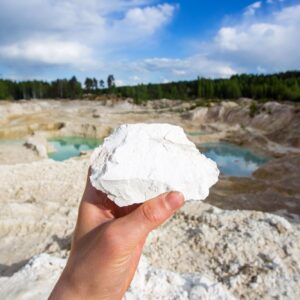
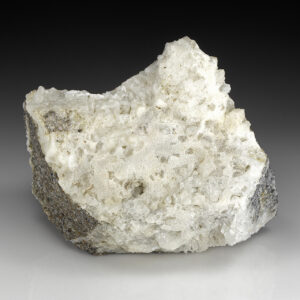
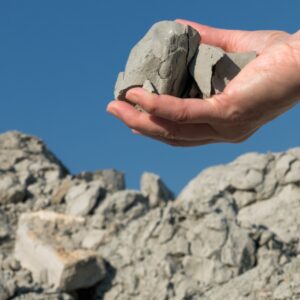
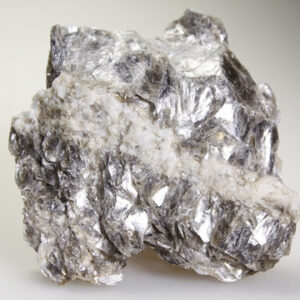
Fine powder, odorless; gray, cream-white, or yellow-brown |
|
Viscosity |
Very high (especially Sodium Bentonite), exhibiting strong thixotropy |
|
Swelling capacity |
High (Sodium Bentonite can swell >10 times its dry volume) |
|
Adsorption capacity |
Large specific surface area; excellent adsorption of liquids, ions, and contaminants |
|
Thermal resistance |
Good thermal stability; non-melting material |
3. Key Applications in Industry and Ceramics
Bentonite is a highly versatile material with widespread industrial applications.
3.1. Applications in the Ceramic Industry
Bentonite is used as an important additive, even at very low dosages:
- Plasticizer (Body Additive)
When added to ceramic body formulations (porcelain, ceramic tiles), Bentonite enhances plasticity and inter-particle bonding, improving formability and green mechanical strength (unfired strength).
Note: Dosage must be carefully controlled (typically 0.25% – 1.0%) as excessive Bentonite may increase drying shrinkage. - Glaze Suspender
Bentonite acts as a suspending agent in ceramic glazes, keeping glaze particles uniformly dispersed in water, preventing settling at the bottom of storage tanks, and ensuring smooth, even glaze coverage on the product surface.
3.2. Applications in Other Industries
- Drilling Industry (Oil & Gas, Piling Works)
Bentonite slurry (drilling mud) is essential for lubricating drill bits, reducing torque, and most importantly stabilizing borehole walls by forming a protective mud cake, thanks to its swelling and viscosity properties. - Metal Casting Industry
Used as a binder in sand molds for iron and steel casting, providing mold strength, plasticity, and thermal resistance. - Oil Refining and Chemical Processing
Activated Calcium Bentonite (Activated Bleaching Earth) is used to adsorb pigments and impurities, decolorizing vegetable oils and mineral oils. - Construction and Environmental Applications
- Used as a waterproofing and sealing material (liners for reservoirs, landfills, dams) due to its swelling-induced impermeability
- Applied in soil improvement to enhance water retention and cation exchange capacity (nutrient retention)
- Animal Feed / Pharmaceutical Applications
Used as a pellet binder, filler, and mycotoxin adsorbent in animal feed formulations.



Reviews
There are no reviews yet.