

 Tiếng Việt

KAOLIN
1. General Introduction
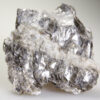
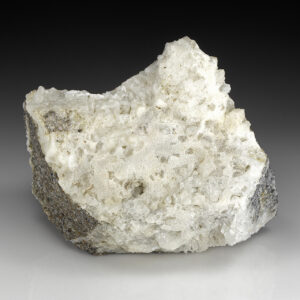
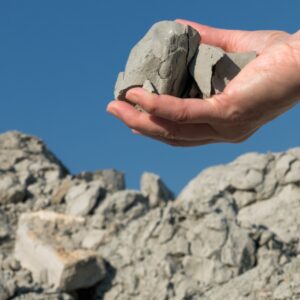
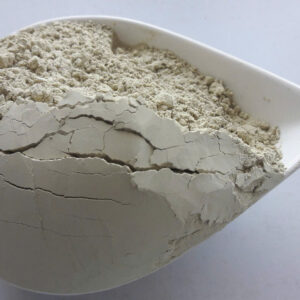
Kaolin is a white, refractory clay formed through the weathering of aluminosilicate minerals, typically feldspar. Its primary mineralogical component is Kaolinite, with the theoretical chemical formula:
Al₂O₃ · 2SiO₂ · 2H₂O
Kaolin is a fundamental and indispensable raw material in the ceramic industry, directly involved in :
- Ceramic body – shaping and structural formation
- Ceramic glaze – stabilization, smoothing, and surface finishing
High-quality kaolin is usually refined to remove impurities such as Fe₂O₃ and TiO₂, achieving high whiteness and purity, which is essential for whiteware and premium ceramic products.
2. Composition and Classification
2.1. Chemical Composition (Theoretical)
|
Component |
Formula |
Content (%) |
|
Aluminum Oxide |
Al₂O₃ |
~30 – 39.5 |
|
Silicon Dioxide |
SiO₂ |
~42 – 56 |
|
Structural Water |
H₂O |
~12 – 13.9 |
Note: Industrial kaolin always contains small amounts of impurities (Fe₂O₃, TiO₂).
Lower Fe₂O₃ and TiO₂ contents result in higher fired whiteness, which is especially critical for white porcelain and high-grade glazes.
2.2. Classification by Ceramic Application
- Refined (Washed) Kaolin
- High whiteness (typically ≥ 75–85%)
- Low Fe and Ti content
- Used for: premium porcelain, sanitary ware, ceramic glazes
- Industrial (Crude) Kaolin
- Medium whiteness
- Used for: ceramic tiles, wall & floor tiles, products not requiring high whiteness
3. Typical Technical Properties (Ceramic Grade)
|
Parameter |
Characteristics |
|
Mineral formula |
Al₂O₃ · 2SiO₂ · 2H₂O |
|
Plasticity |
Medium – good workability |
|
Refractoriness |
Stable and easy to control |
|
Fired whiteness |
High (depends on Fe₂O₃, TiO₂ content) |
4. Applications in Ceramics
4.1. Ceramic Body Applications
Kaolin is a key component in body formulations for tableware, sanitary ware, electrical porcelain, and ceramic tiles:
- Improves plasticity and formability
Facilitates mixing, pressing, rolling, or slip casting due to fine particle size and suitable water absorption. - Enhances mechanical strength after firing
Al₂O₃ from kaolin contributes to the formation of mullite (3Al₂O₃·2SiO₂) at high temperatures, a critical crystalline phase that improves strength, hardness, and thermal resistance. - Improves product whiteness
Refined kaolin ensures bright, clean whiteness, especially for high-end ceramic products. - Reduces cracking and deformation
Helps control drying and firing shrinkage.
4.2. Glaze Applications
Kaolin is an essential component in glaze formulations:
- Source of Al₂O₃ and SiO₂
Al₂O₃ stabilizes the glaze, increases viscosity, and reduces excessive glaze flow, peeling, or crawling. - Suspending agent – anti-settling
Maintains uniform dispersion of glaze particles, preventing hard settling during storage. - Improves surface smoothness and gloss
Fine kaolin particles contribute to smooth, glossy fired surfaces with consistent color. - Adjusts glaze melting behavior
Helps balance glaze vitrification to match the firing temperature of the ceramic body.



Reviews
There are no reviews yet.